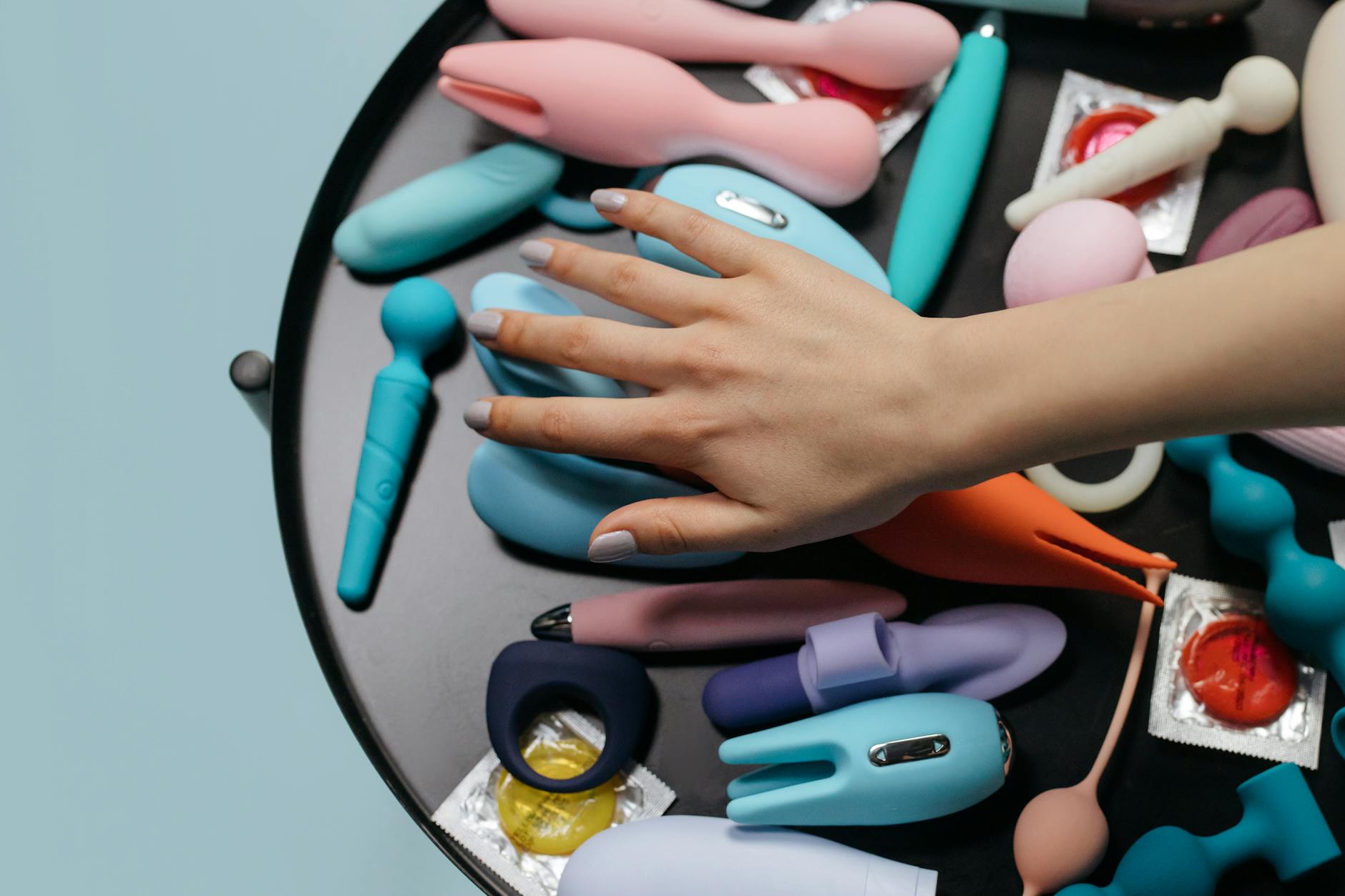
When desire has gone quiet
Let me be direct. When a couple has weathered months or years of disconnection, hurt, or just flat-out stress, desire doesn't return like a switch flipping. It creeps back in fits and starts, and often it needs permission, space, and tools that help you both feel safe experimenting again.
I've worked with hundreds of couples at this exact inflection point. They're still together. They've worked things out, or they're working things out. But the sexual part has atrophied, and trying to resurrect it feels awkward, pressured, or impossible. That's where lemon vibrators and a thoughtful approach come in.
Why desire stalls in long-term stress
When a relationship has been under strain, your body keeps score. Chronic stress raises cortisol, which suppresses sex hormones. Resentment, even if you're actively healing it, still lives in your nervous system. You might not consciously think "I'm angry at you" during sex, but your body remembers, and arousal doesn't show up when you're defended.
Additionally, desire in long-term relationships is fragile. It relies on a specific cocktail of safety, novelty, and attention. When those three things vanish for long enough, the neural pathways that fire together thin out. You're not broken. You're just recalibrated.
The problem with jumping straight to "normal" sex
Here's what I see couples try first: they assume they just need to get back to what used to work. They schedule sex, they try to recreate old dynamics, or worse, they white-knuckle it and hope desire appears if they just try hard enough. Spoiler. It doesn't.
The reason is neurobiological. When you've been disconnected, the amygdala (your threat-detection system) is still flagged. Sex feels vulnerable when you don't feel entirely safe. Your body won't fully relax, arousal will be shallow, and the whole experience feels like work. Neither of you feels good, and both of you feel more distant afterward.
Lemon clitoral vibrators, specifically, help because they bypass some of that friction. They offer a third presence in the room. Something novel. Something that doesn't require you to be performing the old version of your relationship.
How a lemon vibrator changes the dynamic
When you introduce a lemon clitoral vibrator into a couple's intimacy after a long stall, three things happen.
First, it depressurizes the moment. You're not trying to resurrect passion from willpower alone. There's an external tool doing some of the heavy lifting. Paradoxically, this reduces performance anxiety for both partners. You're not wondering if you're doing it right. You're exploring together.
Second, it creates a natural boundary around vulnerability. If your partner has worried that resuming sex means accepting the hurt, or agreeing that everything's fine when it isn't, a vibrator changes that conversation. You're not trying to pretend. You're saying: "Let's try something new. Let's see how this feels."
Third, it often reintroduces novelty without demanding emotional labor. New sensations wake up the nervous system. The suction pattern of a lemon vibrator is distinct from what either of you might have experienced before, or at least distinct from the tired routines of your relationship stall. Novelty doesn't fix trust issues, but it does create a small pocket of curiosity.
Practical steps to introduce this conversation
Don't spring a vibrator on your partner mid-intimacy or as a surprise. That backfires almost every time. Instead, talk about it outside the bedroom when you're both calm.
Frame it as an experiment, not a judgment on anyone's performance. "I've been thinking about ways we could explore together again. I found something I'm curious about. Would you be open to trying it?" Notice that isn't "Our sex life needs this" or "You're not doing it right." It's curiosity.
If your partner says no, that's information. Listen to it. Don't push. Resistance often means they're not ready, or they have specific fears you need to address first.
If they say yes, agree on a timeline. Not tomorrow. Not when you're already in bed. Maybe in a few days, when you both feel prepared and have lowered expectations.
How to use a lemon vibrator when desire is returning slowly
Start with exploration, not performance. One of you (usually the receiving partner) holds the lemon clitoral vibrator, or both of you do. Start on the lowest setting. The goal is sensation, not orgasm. You're reacquainting yourself with pleasure without the pressure of a finish line.
Take your time with the lower settings. Most people who are rebuilding desire after stress actually need more time to warm up, not less. Fifteen to twenty minutes is normal. This isn't slow. It's anatomically accurate.
The partner who isn't receiving can be present, touching, talking, or simply near. Don't turn it into parallel play where one person uses the vibrator and the other scrolls their phone. But also don't make it a performance. You're learning your bodies again.
If the receiving partner wants penetration or other touch, that's fine. The lemon vibrator can work alongside other sensations. If they don't, that's also fine. The goal here is consent-based pleasure, not a return to pre-stress sexuality.
After the first time, talk about it. What felt good? What felt weird? What did you notice about your own response? This feedback loop is crucial. It reminds your partner that you're both on the same team.
Common friction points and how to navigate them
Some people feel self-conscious using a vibrator with their long-term partner. They worry it means they're not enough, or that their partner prefers the vibrator to them. This is worth naming out loud. "I notice you seem hesitant. I want to be clear: I want this because I want to be closer to you. Not instead of you."
Some people worry that introducing novelty means they should have done this earlier, or that they're admitting the relationship is in trouble. That's a conversation to have outside the bedroom. A lemon vibrator is a tool for couples who care about rebuilding, not a sign of failure.
Some people worry about pressure to orgasm. If you've been disconnected, putting expectations on climax will absolutely kill the moment. The goal is sensation and reconnection, not conquest.
When slow desire return is actually good news
Here's what I tell couples: slow desire return is often more sustainable than what you had before. Why? Because you're rebuilding with intention. You're not running on autopilot or the fading rush of new relationship energy. You're choosing each other again, and that choice is real.
Lemon vibrators, and a patient approach to them, can be part of rebuilding that choice. They're not the whole story. The hard work is still in the conversations, the trust-building, the willingness to be vulnerable again. But they're a practical anchor point. A way of saying: "I want to feel pleasure with you. And I'm willing to try something new to get there."
People also ask
Is it normal for desire to take months or years to return after relationship stress?
Yes. The body doesn't distinguish between emotional and physical threats. If your nervous system has been flagged as unsafe for a long time, it doesn't just switch off because you've had a productive conversation. Desire returns gradually as trust rebuilds. For some couples, that's weeks. For others, it's years. Neither timeline is wrong. What matters is forward movement.
Can using a lemon vibrator actually help rebuild intimacy, or is it just a distraction?
It's both, and that's okay. Technically, it can't fix a broken relationship by itself. But reintroducing pleasure, novelty, and low-pressure touch can help your nervous system remember that closeness with your partner feels good. That's not a distraction. That's data your body needs.
What if my partner refuses to use a vibrator or talk about sexuality again?
That's a signal that there's deeper work to do. Sometimes that means couples therapy. Sometimes it means processing specific grievances or betrayals that haven't healed. A vibrator can only help if both people are willing to experiment. If one person is shut down, that conversation comes first.
Should we use a lemon vibrator alone first, or together?
If you've been disconnected for a long time, exploring solo first can be helpful. It lets you reacquaint yourself with your own pleasure without performance pressure. Then you can bring that confidence into partnered exploration. But some couples prefer to explore together from the start. There's no wrong order.
**How often should we use a lemon vibrator when we're rebuilding?
There's no prescription. If you're using it two or three times a week and it feels connective, that's enough. If you're using it once every two weeks because you're still building confidence, that's fine too. Frequency matters less than the consistency of showing up for each other.
**What if we use the vibrator and nothing changes?
Then you've learned something. Maybe the issue isn't about tools. Maybe it's about deeper incompatibility, unresolved hurt, or misaligned needs. A lemon vibrator can help couples who want to reconnect. It can't fix couples who are using intimacy as a proxy for other problems. If you're in that position, a couples therapist might be the tool you actually need.
The reality of rebuilding
When desire has gone quiet after long-term stress, bringing it back requires patience, communication, and tools that help you both feel brave enough to try. A lemon clitoral vibrator is one such tool. It's not magic. But it is a way of saying: "I want this with you. Let's figure it out together."
That conversation, and that willingness, often matters more than the vibrator itself. If you're ready to explore further, whether that's understanding your own pleasure better or having a deeper conversation with your partner about rebuilding intimacy, we're here to help. Visit /contact to reach out.