Let's be real about arousal timing
Your partner is ready. You're not. Maybe they're touching you, kissing you, and their body is already signaling "let's go." Meanwhile, your brain is still running a grocery list and your body feels like it's moving in slow motion. Then comes the thing nobody wants to say out loud: the disappointment in their eyes, the shift in their touch, the subtle (or not subtle) sense that you've let them down.
This isn't a rare moment. It's a common friction point in relationships, and it often carries a lot of shame on both sides. Your partner feels rejected or like they're doing something wrong. You feel broken or like you're not attracted to them anymore.
Here's the actual truth: arousal is not a switch. It's a process. And the gap between your partner's arousal curve and yours doesn't mean either of you is failing.
Why the timing gap happens
Physiologically, bodies are wired differently. Research shows that people with vulvas typically take longer to reach measurable arousal than people with penises. It's not a mood thing or a sign of low desire. It's just neurology.
Then there's everything else layered on top. You might be carrying mental load from the day (even if you don't realize it until your partner touches you). You might need a specific kind of touch to prime your nervous system. You might respond better to visual or auditory cues that haven't been initiated yet. You might need to feel emotionally connected first, or you might need the opposite: to drop into your body without talking.
Your partner, meanwhile, has their own curve. They might be the type who gets aroused from eye contact alone. They might jump to wanting penetration. Their body doesn't need a warm-up period.
When these two different neurologies meet without conversation, it becomes a conflict of expectations. They assume you should be ready by now. You feel pressured. Both of you leave the encounter feeling unseen.
The conversation you actually need to have
This one is harder than it sounds because it touches on rejection fears. But it's also the thing that changes everything.
Pick a time when you're not in bed. Breakfast, a walk, a random Tuesday afternoon. Not during sex, not in the moment of arousal mismatch. Your partner's guard is down, and you're not both activated.
Start here: "I want to talk about something I've noticed, and it's not about attraction or desire. It's about timing. My body takes longer to warm up than yours does. That's not you doing anything wrong. It's just how I'm built."
Then, the critical part: offer a solution, not just a problem. Don't say "I'm just slow." Say something like, "I want to figure out what helps me get there faster. Sometimes I need more foreplay. Sometimes I need to focus on just feeling instead of thinking. Sometimes a vibrator helps because it shortcuts the process and gets my nervous system in the right place faster."
Here's where a clitoral vibrator changes the game. Instead of you lying there trying to get aroused while your partner waits (and both of you feel stuck), you have a tool that can accelerate your own arousal without anyone waiting or feeling rejected.
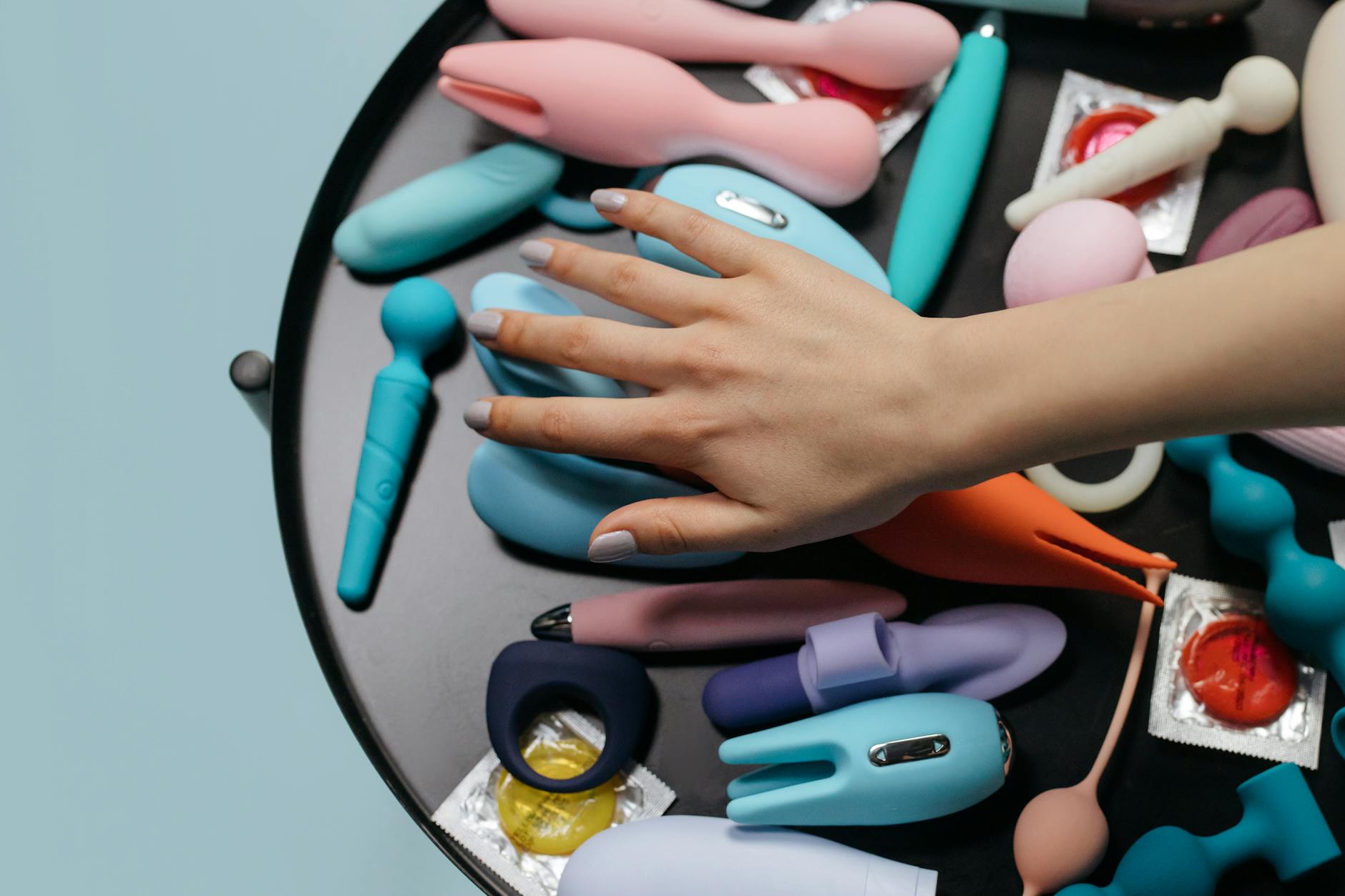
Photo by cottonbro studio on Pexels
How a Lemon vibrator shifts the dynamic
A lemon clitoral vibrator like the Lem works because it removes the waiting game. Instead of your partner touching you while you try to build arousal through their touch alone, you can use the vibrator to get your own nervous system activated in parallel.
This is not about replacing them. It's about meeting yourself halfway.
Here's the practical way this works: your partner initiates. You grab the vibrator. You use it while they touch you, kiss you, or just be present. In minutes, not 20 minutes, your body is responding. Your arousal catches up to theirs. Now you're in sync.
What changes is the energy in the room. Instead of "come on, hurry up," or "why aren't you ready," the vibe becomes collaborative. Your partner sees you taking charge of your own pleasure. They're participating in making it happen, not waiting for it to happen. That's a huge shift.
Alternatively, you might use the vibrator solo while your partner is with you. You get aroused quickly to your baseline, and then you transition to what you both want. Some couples find this feels cleaner. Others find it kills the intimacy. You get to decide.
The settings and rhythm that help
Most lemon adult toys have a range of intensity levels. Start lower than you think you need. Low intensity patterns actually tend to build arousal faster than high intensity because they avoid overstimulation, which can make the body plateau.
Try pulsing patterns instead of steady vibration. Your nervous system responds faster to rhythm than to constant sensation.
The positioning matters too. Clitoral vibrators work best when they make contact with the external clitoris and the surrounding tissue. Press rather than wiggle. Let the vibrator do the work.
If your partner is involved, they might hold you while you use it. They might kiss your neck. They might just watch, which for some people is incredibly arousing. For others, it adds performance pressure. Talk about what feels less like "they're waiting" and more like "we're doing this together."
The conversation about using toys with a partner
Some partners worry that you want the vibrator instead of them. This is where communication prevents a real problem.
You're not choosing the toy over them. You're choosing to show up to sex in a more aroused state so that when you connect, you're both present and responsive. That benefits both of you.
You might say: "I want to use this because I know my body, and I know what gets me there. Using it doesn't mean I don't want you. It means I want us to be on the same page so we can both actually enjoy this."
If your partner still feels threatened or resistant, there's a deeper issue about control or insecurity that a vibrator won't fix. That's worth addressing separately, possibly with a couples' therapist.
But often, when you frame it as a tool for mutual satisfaction rather than a replacement, the resistance softens.
When to bring it in, and when to skip it
You don't need to use a vibrator every time you have sex. Sometimes you want to connect without tools. Sometimes you want the slower, quieter intimacy.
Bring the vibrator in when: you're feeling the time pressure, when your partner is clearly aroused and waiting, when you know your body is going to take longer today, or when you want to feel more confident that you'll orgasm during sex.
Skip it when: you're both enjoying the slow build, when the focus is on deep penetration or other sensations, when you want that particular quiet connection, or just because you don't feel like it.
The point is agency. You get to choose. Your partner gets to choose. The vibrator is a tool, not a requirement.
What this does to the relationship dynamic
When you solve the arousal timing gap, you remove a major source of unspoken resentment. Your partner stops feeling rejected. You stop feeling pressured. Both of you get to enjoy sex instead of managing it.
There's also something deeper. When you use a lemon sexual toy confidently, you're telling your partner something important: "I know my body. I'm not ashamed of what helps me feel good. I'm willing to advocate for my own pleasure."
That's attractive. That's the opposite of pressure. That's partnership.
FAQ: Arousal timing and vibrators
Why does my partner get aroused so much faster than I do?
Different nervous systems, different hormones, different responsive tissues. Some of it is physiological. Some of it is how you were socialized around sexuality. Some of it is just variation in how bodies work. There's no "normal" speed. There's just your speed and their speed, and they don't have to match.
Will using a vibrator make me numb to my partner's touch?
No. Numbness happens if you use very high intensity vibrators on maximum for long periods. Clitoral vibrators like the Lem use specific patterns that don't cause desensitization. Plus, the vibrator activates your nervous system differently than a finger or mouth. They're complementary, not replacement.
What if my partner feels like I'm not attracted to them if I need a vibrator to get aroused?
This is insecurity talking, not reality. Needing a vibrator to reach arousal faster is about your neurology, not your attraction. You might want to have a longer conversation about where that fear comes from, and potentially work with a couples' counselor if it's a persistent pattern.
Can I use a lemon clitoral vibrator while my partner and I are having penetrative sex?
Yes. Some couples find that external stimulation during penetration intensifies the experience. Others find it's too much sensation at once. You get to experiment and see what works for your bodies.
What if I want to use a vibrator but my partner isn't ready to include toys in our sex life?
That's a conversation worth having, probably when you're not in bed. You might explore why they're hesitant. Sometimes it's about insecurity, sometimes it's about not understanding how toys work, sometimes it's about past experiences. Often, when partners see their significant other using a vibrator and feeling more pleasure, the resistance softens. But if it doesn't, that might point to a larger compatibility or communication issue.
How do I bring up wanting to use a toy if I'm worried my partner will be offended?
Frame it as something that helps you feel better, not something that replaces them. Start small. You don't need to make a big announcement. You might just introduce it naturally during sex, or mention it in a calm conversation outside the bedroom. "I've been thinking about trying a vibrator to see if it helps me feel more pleasure during sex. I'd like us to explore that together, but I also want to make sure you feel comfortable." That opens dialogue without defensiveness.
The actual shift
When you use a lemon vibrator not as a Band-Aid for insecurity, but as a tool for your own pleasure and your partner's understanding, something changes in the dynamic. Sex becomes less about managing expectations and more about both of you showing up as you are.
Your partner learns that your arousal takes longer. You learn that you can take control of that process. You both learn that pleasure is collaborative, not performative. And next time, instead of waiting and worrying, you both know exactly what to do.
That's not a small thing. That's the foundation of sex that actually works for both people.