Let's name what's actually happening
Vaginismus isn't a moral failure, a sign you're broken, or something to shame yourself about. It's involuntary pelvic floor muscle tension that makes penetration feel painful, tight, or impossible. Pelvic floor dysfunction covers a broader range of tension patterns. Both of them share one thing: your body is protecting itself, and fighting that protection head-on doesn't work.
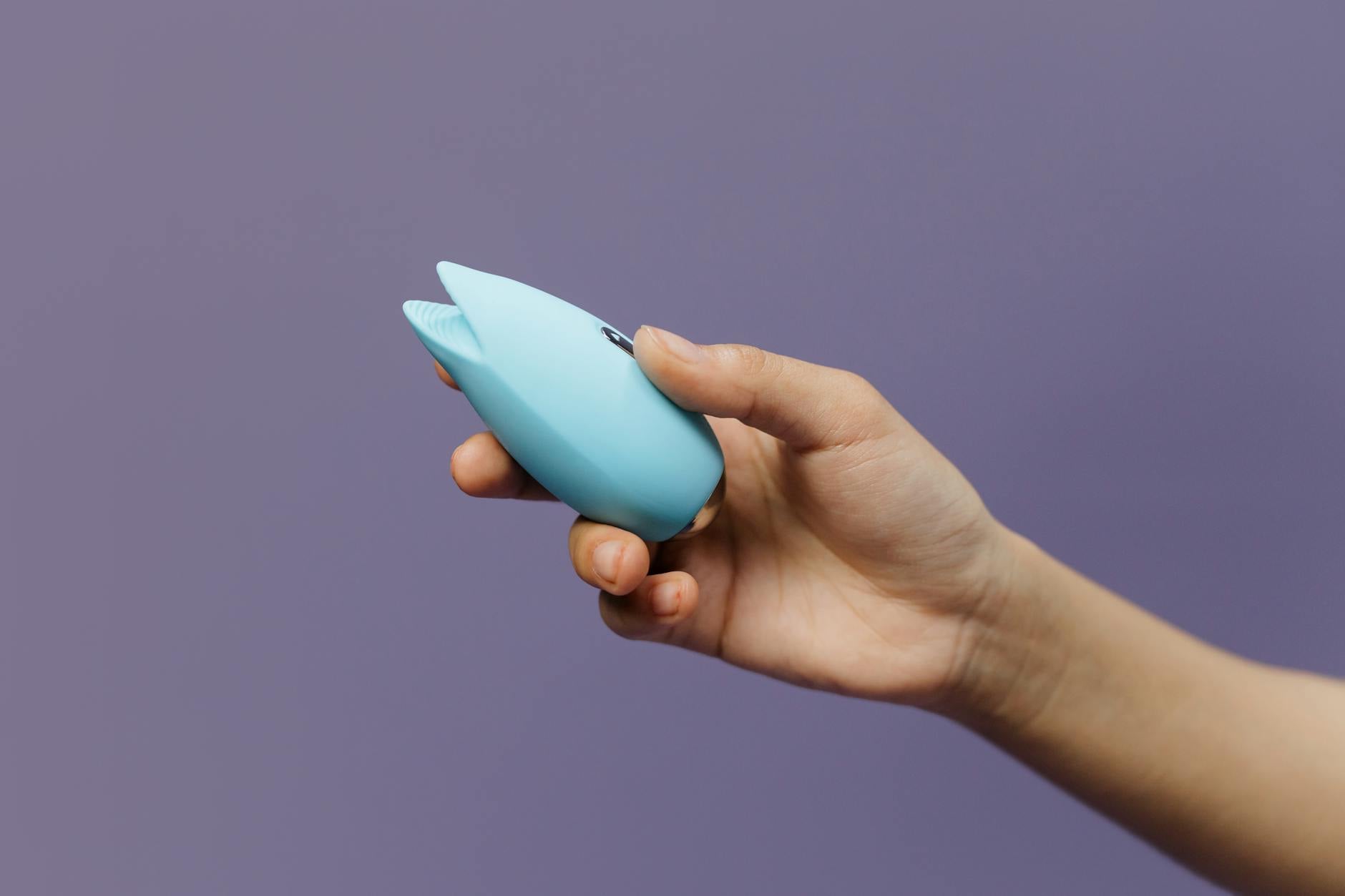
Here's what does work. Instead of chasing penetration right now, you give yourself permission to explore clitoral pleasure separately. A lemon vibrator becomes your way back to sensation without triggering the protective response that's locked your pelvic floor in place.
Why clitoral stimulation is different for pelvic tension
When you have vaginismus or pelvic floor tension, the threat response in your nervous system is primed. Anything that suggests penetration or deep pressure can trigger involuntary muscle contraction. That's not weakness. That's your body doing exactly what it's been conditioned to do.
Clitoral stimulation sits outside that threat zone. Your clitoris isn't asking anything of your pelvic floor. It's pure sensation without demand. A lemon clitoral vibrator works particularly well because the suction mechanism delivers gentle, consistent stimulation that doesn't require you to relax into anything or perform for anyone. You're just receiving.
Many people find that regular clitoral pleasure actually softens pelvic floor tension over time. Oxytocin floods the system. The nervous system learns what relaxation feels like. Pleasure becomes associated with your body, not pain.
The setup that removes pressure
Three things matter before you even touch the vibrator.
First, privacy and no audience. If there's a partner in the room, even asleep, your nervous system is still performing. That baseline tension doesn't disappear. You need time alone to remember what your body feels like without an audience. Give yourself that without guilt.
Second, no timeline. "I'm going to orgasm in the next 15 minutes" is pressure. Your nervous system knows pressure when it feels it. Instead, commit to 20 or 30 minutes of exploration with zero orgasm goal. If an orgasm happens, it's a bonus. The real win is sensation.
Third, zero penetration intention. This is clitoral work only. Not even a finger inside. Not even the thought that maybe you'll try. That thought alone can trigger protective tension. Make the agreement with your body clear and non-negotiable: tonight, the clitoris only.
How to actually use the lemon vibrator
Start with the vibrator off. Hold it. Feel the weight. Let your hand get used to it. Warm it slightly in your palm if you want. There's no rush.
When you're ready, turn it on at the lowest setting. Pattern one, minimum intensity. If you have a lemon vibrator, start with the gentlest suction. The point isn't intensity right now. It's reconnecting with the idea that sensation can happen without pain.
Try these three approaches to start.
Over clothing. Seriously. Your vulva might be hypersensitive right now. The fabric buffers the intensity and gives you control. Many people find that stimulation over underwear removes the psychological threat of direct contact.
On the inner thighs. The skin there is sensitive but feels less "loaded" than the vulva itself. Spend 5 to 10 minutes here. This is desensitization in the best way. Your nervous system learns that vibration means pleasure, not threat.
On the outer vulva only. When you're ready, move to the outer labia and mons pubis. The clitoral glans might feel too intense right now, and that's completely normal. Avoid it for now. The rest of the vulva has plenty of nerve endings.
Keep intensity low. Seriously. You have months of relaxation ahead. This isn't a test to pass. You're training your nervous system that touch is safe.
The partner conversation, if there is one
If you have a partner, they need to understand three things clearly.
First, this isn't about them. This isn't punishment or rejection. This is you and your body relearning what safety feels like. Their role is to stay out of this space entirely while you're healing.
Second, pressure to progress faster will set you back. I've seen this a hundred times. A well-meaning partner says "When do you think you'll be ready for penetration?" and instantly, pelvic floor tension spikes. The clock starts running. The pressure sneaks in. Don't let that happen. Set a clear agreement: no timelines, no questions about progress, no touching your body during this phase unless you ask.
Third, their pleasure doesn't need to pause. They can have solo time with their own tools. They can be intimate with you in other ways. Penetration is not the only expression of intimacy that matters. If they need that support, send them to a sex therapist or couples counselor who understands vaginismus. This isn't something you fix alone.
The nervous system piece that actually heals
Vaginismus and pelvic floor dysfunction live in your nervous system, not just your muscles. Your body learned to protect itself, and protection becomes habit. Using a lemon vibrator regularly trains your nervous system that:
Your vulva can feel good. Touch doesn't always mean pain. Relaxation is possible. Your pleasure matters and doesn't require penetration to be valid.
That reprogramming takes weeks, sometimes months. There's no rush. The lemon vibrator becomes your tool for daily nervous system healing. Some people use it 3 to 4 times per week. Others find that daily is what gets them there. Listen to your body.
One more thing. If you've had trauma, especially sexual trauma, vaginismus often shows up as a completely normal protective response. A vibrator can help with the physical tension, but talk to a trauma-informed therapist. You deserve support that addresses the root, not just the symptom.
When to bring a partner back in
You'll feel it when you're ready. It's not a specific date or metric. It's a shift in your nervous system. Using the vibrator stops feeling transgressive. Your body starts to relax more easily. Penetration-free intimacy with a partner feels genuinely good instead of like foreplay that's going somewhere you're not ready for.
When that shift happens, you can start to expand slowly. Maybe your partner touches you with the vibrator on. Maybe they're in the room while you use it solo. Maybe penetration comes back eventually. Maybe it doesn't, and clitoral pleasure becomes your primary path to orgasm permanently. All of these are fine.
The pressure to return to "normal" sex is real and toxic. If you're healed and vaginismus is gone, but you prefer clitoral stimulation, that's not failure. That's information about your body. Honor it.
Photo by cottonbro studio on Pexels
Common questions as you start
Will using a vibrator make the tension worse?
No, but only if you're using it the right way. If you're forcing intensity or pushing toward an orgasm goal, yes, tension can spike. That's your nervous system saying "not this way." Lower the intensity. Slow down. Remove the goal. Used gently and without pressure, a clitoral vibrator actually teaches your nervous system that sensation is safe.
How long until penetration feels normal again?
There's no timeline. For some people, 6 to 8 weeks of consistent clitoral work softens pelvic floor tension enough that penetration becomes possible again. For others, it's months. Trauma survivors might need a year or more, plus therapy. Stop measuring progress. Focus on whether pleasure is increasing, not whether you're "ready" for something you're not sure you want.
Can I use the lemon vibrator if I'm in a relationship but haven't told my partner?
Yes, and this is actually the recommended starting place. Your nervous system needs to learn safety without an audience or performance pressure. Once you've spent a few weeks reconnecting with your own pleasure privately, the conversation with your partner becomes much easier. You're not coming from a place of shame or secrecy. You're coming from "I found something that helps my healing and I want to share that with you."
Is pelvic floor physical therapy necessary?
It's usually helpful. A pelvic floor physical therapist can teach you how to relax your pelvic floor on purpose, not just during pleasure. They use techniques like internal manual therapy, biofeedback, and breathing work. A vibrator complements that work beautifully but doesn't replace it. Ideally, you're doing both.
What if orgasms feel weird or wrong even with clitoral stimulation?
That's a trauma response, and it's common. Your body learned that pleasure equals danger at some point. An orgasm feels like losing control, which terrifies the nervous system. Work with a trauma-informed therapist on this specifically. A vibrator alone won't fix this layer. You need professional support to untangle it.
Should I feel pressure to progress to partnered sex?
Absolutely not. Some people heal from vaginismus and find that they genuinely prefer solo pleasure or non-penetrative partnered intimacy. That's not failure. That's your body telling you what it actually wants, separate from what you thought you were supposed to want. Listen to it.
The bigger picture
Vaginismus and pelvic floor tension are your nervous system's way of saying something needs to change. Sometimes it's trauma. Sometimes it's relationship dynamics. Sometimes it's pure biology. Whatever the root is, a lemon vibrator gives you a way to reclaim sensation and pleasure right now, without waiting for everything else to be fixed.
Your body isn't broken. It's protected. The distinction matters. Once you accept that protection was necessary, you can start slowly, gently rewiring what safety and pleasure feel like. A clitoral vibrator is a tool for that rewiring. Use it without shame, without timeline pressure, and without the expectation that it needs to lead anywhere. Sometimes the destination is just pleasure itself.
If you need support beyond what a vibrator can offer, reach out to a qualified therapist or pelvic floor specialist. You don't have to figure this out alone. Help is available, and you're worth it.
Sources & Further Reading
- American Psychological Association. (2023). Vaginismus and pelvic floor dysfunction: Clinical assessment and treatment approaches. Journal of Sexual & Marital Therapy.
- Basson, R. (2007). Pursuing desire and sexual pleasure in a changing world. Sexual and Relationship Therapy, 22(1), 5-14.
- Rosenbaum, T. Y. (2010). Physiotherapy in sexual medicine. The Journal of Sexual Medicine, 7(2), 873-891.
- International Society for the Study of Women's Sexual Health (ISSWSH). Evidence-based clinical practice guidelines for vaginismus and genito-pelvic pain/penetration disorder. Retrieved from isswsh.org
- Pelvic Health Alliance. Understanding pelvic floor dysfunction and recovery. Retrieved from pelvichealthalliance.org