
When your body suddenly doesn't respond the same way
Let's be real. You start a new medication for your mental health, your blood pressure, or your hormones, and somewhere around week two or three, you notice your body isn't cooperating the way it used to. The thing that used to feel electric now feels distant. You're not imagining it. This is one of the most underreported side effects of common medications, and almost nobody talks about it because prescribers often don't ask and patients feel awkward bringing it up.
Here's what you need to know: medication-induced changes to clitoral sensation are real, they're temporary or manageable, and there are specific strategies that work.
Which medications actually affect sensation
Three classes show up most often in my practice:
SSRIs and SNRIs (antidepressants like sertraline, paroxetine, venlafaxine) dampen sensation by suppressing neural arousal signals. The same mechanism that helps with anxiety makes pleasure feel muted. It's particularly common in the first four to eight weeks, and sometimes improves as your body adjusts. Sometimes it doesn't.
Hormonal birth control alters blood flow and tissue sensitivity by changing estrogen and progesterone levels. The sensation shift often tracks with your cycle, worsening right before your period or during hormone-free weeks.
Beta-blockers and ACE inhibitors (blood pressure medications) reduce blood flow to genital tissue by design. Lower blood flow means slower arousal, less engorgement, and duller sensation. The effect is consistent and often doesn't improve without dosage adjustment.
Other medications that commonly affect sensation include antihistamines, anticholinergics, and some antipsychotics. The mechanism varies, but the result is similar: the pathway between stimulation and pleasure narrows.
What's actually happening in your body
Medication affects pleasure at three points. First, the signal. Your nervous system becomes less reactive to touch. Second, the blood flow. Less engorgement means less sensitivity. Third, the lubrication and tissue thickness. Thinner, drier tissue transmits sensation differently than plump, well-hydrated tissue.
None of this means your capacity for orgasm is gone. Your clitoris still has the same nerve density. The pathways still exist. The volume is just turned down, and the delay is turned up.
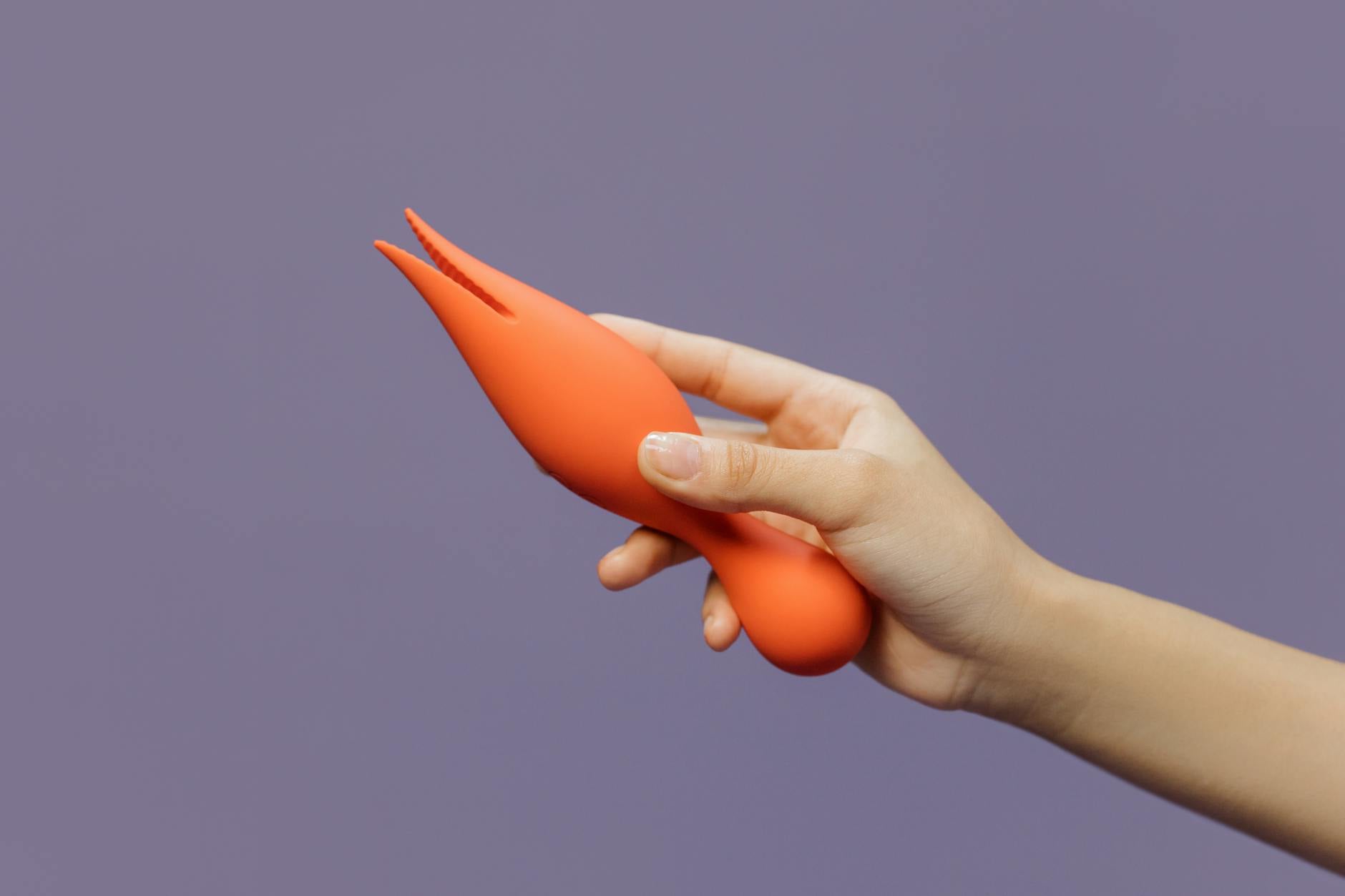
Photo by cottonbro studio on Pexels
Why traditional vibrators stop working
Standard vibrators rely on you being able to feel incremental changes in intensity. If your baseline sensitivity has dropped, you're trying to feel something that's already quiet. You turn up the vibration. It's still muted. You keep going until you're either numb, frustrated, or convinced your body is broken. It's not. The tool is just wrong for this moment.
This is where the distinction between vibration and suction matters. A traditional vibrator asks your tissue to feel rapid movement. A suction-based tool like the Lemon clitoral vibrator asks your tissue to respond to pressure changes and micro-suction patterns. If your sensation is dampened by medication, suction often bypasses the numbness by engaging a slightly different neural pathway.
It's not magic. It's applied anatomy.
How Lemon vibrators adapt to medication-related numbness
The Lemon clitoral vibrator works through pulsing suction rather than direct vibration. This matters when sensation is compromised because suction stimulates deeper nerve clusters without requiring the same threshold of feeling on the surface. Many people report that suction-based tools work better than traditional vibrators when they're on SSRIs, hormonal birth control, or blood pressure medications.
The pattern also matters. Suction tools offer rhythm patterns that traditional vibrators can't replicate. If your body is slow to respond, a pattern that builds gradually instead of hitting you at constant intensity can feel more accessible.
Start at the lowest setting. Medication-related numbness often improves with patience and consistency, and you don't want to desensitize yourself further by starting too intense. Work up slowly over multiple sessions, weeks even. Your body will recalibrate.
The conversation with your prescriber
If sensation changes are severe, worth bringing this up. Most prescribers have other medication options if the side effect is significant. SSRIs differ in how much they affect arousal. Dosage adjustments sometimes help. For birth control, switching to a lower-hormone formulation or a different progestin might restore sensation without sacrificing contraceptive reliability.
The timing matters too. Some medications show the strongest side effects in the first month, then improve. Others are consistent. Knowing which you're dealing with changes how you approach adaptation.
Practical adjustments that actually help
Four things work consistently when medication dampens clitoral sensation.
First, extend your warm-up. Budget 20 to 30 minutes instead of 10. Blood flow needs time to shift into the right areas, and if medication is slowing that process, rushing doesn't help.
Second, use more deliberate lubrication. Water-based lube isn't just for comfort when sensation is muted. Reduced friction can paradoxically make sensation easier to feel. It removes a layer of effort your body has to push through.
Third, combine tools. Some people find that a vibrator in one place and suction in another creates enough complexity that the brain pays attention. Experiment with simultaneous stimulation rather than solo play.
Fourth, be consistent with timing. If you notice sensation improves at certain times of the day or at certain points in your cycle, work with that pattern rather than against it. Morning sessions sometimes feel more responsive than evening. Mid-cycle sometimes feels sharper than late cycle. You're not being inconsistent. You're being smart.
When numbness might be something else
If sensation hasn't shifted since starting a medication, the medication might not be the cause. Depression, anxiety, relationship friction, and pelvic floor tension all suppress arousal signals. Sometimes medication just reveals what was already there.
If sensation returned briefly but has flatlined again, your body might have adapted to the medication's effect. This sometimes requires dosage adjustment, adding a second medication to counter the side effect, or switching entirely.
Worth discussing with a doctor if sensation doesn't improve within three months or if the change feels sudden and severe despite being on a stable dose. That pattern suggests something else is happening alongside the medication.
The reset that matters most
Here's what I tell people in my practice. Medication that supports your mental health is more important than any single pleasure practice. Full stop. But that doesn't mean you give up on sensation. It means you adapt. You experiment with lemon clitoral vibrators instead of traditional vibration. You build in time instead of rushing. You have an actual conversation with your prescriber if the side effect is bad enough.
Your body is not broken. Your medication is doing something useful, and your pleasure practice just needs recalibration. That's all this is. You're not starting over. You're adjusting.
People also ask
How long does it take for medication side effects on arousal to improve?
It depends on the medication. SSRIs show the most improvement in weeks 4 to 12 as your body adapts. Some people never regain full baseline sensation on these medications, and that's worth discussing with your prescriber if it matters to you. Hormonal birth control side effects sometimes improve after one or two cycles as your body adjusts to the new hormone level. Blood pressure medications typically don't improve on their own. If sensation loss is significant, dosage adjustment or switching medications is usually the answer.
Can you use a Lemon vibrator with other toys at the same time?
Absolutely. Combining sensations can actually help when one area of sensation is dampened. Using suction in one place and traditional vibration elsewhere sometimes creates enough combined stimulus that your brain registers it better than a single tool alone. Just start with lower intensity on both and work up. Your body will tell you what combination feels best.
Does the type of antidepressant matter for arousal side effects?
Yes. Paroxetine and sertraline have higher rates of arousal and orgasm side effects than others like bupropion or mirtazapine. If sexual side effects are a deal-breaker for you, this is a genuine conversation to have with your prescriber when starting or switching medications. There are options. You shouldn't have to choose between mental health support and pleasure.
Is sensation loss from medication permanent?
It depends. For some people, sensation returns when the medication stops or when they switch to a different one. For others, even after stopping, it takes months for the nervous system to fully recalibrate. And yes, for some people on certain medications, the dampening is permanent as long as they're on that medication. This is why the conversation with your doctor matters. You're gathering information about your specific situation, not just accepting it as fixed.
Can lubrication really make sensation feel stronger?
Countintuitively, yes. When sensation is already dampened, friction adds another layer of distraction your nervous system has to process. Reducing friction sometimes makes what sensation is there more noticeable. It's like turning down the volume on background noise so you can hear the thing you're actually trying to listen to.
Should I stop my medication to fix arousal side effects?
No. That's a conversation between you and your prescriber, not a decision to make alone. Mental health medication serves a purpose, and stopping it suddenly is genuinely risky. What's worth discussing: switching medications, adjusting dosage, or adding a second medication to counter the side effect. These are real options. Work with your healthcare provider to find what supports both your mental health and your pleasure.
The real picture
Medication-induced changes to sensation are one of the most common and least discussed side effects in healthcare. It's not your imagination. It's not permanent unless you decide to keep it that way. And it absolutely doesn't mean your pleasure life is over. It just means you need to adapt your approach, try different tools like lemon clitoral vibrators, and have honest conversations with your prescriber about what matters to you.
Your body works differently right now. That's information. Use it to find what actually works instead of insisting that your old approach should still work. It won't. But something will. Reach out if you want to talk through what might work for your specific situation.