The thing nobody tells you
You're not actually afraid of the vibrator. You're afraid of the conversation. And that fear has a name: anticipatory anxiety. Your brain is playing out seventeen worst-case scenarios while your partner is probably just thinking about what's for dinner.
Here's what I've seen in over a decade of working with couples: the conversation about introducing a lemon vibrator is almost always easier than the mental rehearsal. And it almost always strengthens the relationship because it requires vulnerability, which is exactly what couples need more of.
Let's talk about how to do this without it feeling like a performance.
Why you actually want to have this conversation
Three reasons beyond "more pleasure."
First, secrecy erodes intimacy. If you're keeping this fantasy or desire hidden, you're creating a tiny partition in the relationship. Not a big deal in month one, but these partitions stack up. The conversation dissolves that partition.
Second, your partner probably has desires they haven't mentioned either. This conversation opens a door for them. You're not just asking for what you want. You're saying, "I trust you enough to tell you what I want, and I want to know what you want too."
Third, lemon vibrators and other adult toys change the physical dynamic in ways many partners find hot. They're not a replacement for your partner. They're a tool you both get to use. That distinction matters because it reframes the whole thing from "I'm not enough" to "Let's explore this together."
The setup matters more than you think
Timing: not during sex, not during an argument, not when either of you is exhausted. Pick a quiet evening when you're both relaxed. A walk is perfect. A car ride is perfect. Anywhere you're not making direct eye contact at the moment you start.
Opener: "I've been thinking about something I want to try with you, and I got a little nervous about bringing it up. But I'd rather tell you than keep it to myself." That's it. Simple, honest, low-pressure.
Pause. Let them ask the question. "What's on your mind?" or "What is it?"
Then: "I've been curious about using a vibrator together. I think it could be really fun for us, and I wanted to see what you think." You've said it. You're done with the big scary part.
What happens next (and why it's usually fine)
They might say yes immediately. Some partners light up. This has been on their mind too, or they're genuinely excited to try something new.
They might ask questions. "Like what kind?" or "How would that work?" or "Are you not satisfied with what we're doing?" This last one is the vulnerability point. Answer it directly: "I'm satisfied with you. This isn't about you not being enough. I'm curious about adding something new to what we already have." That's not spin. That's the actual truth for most people.
They might need time to think about it. That's completely valid. "I need to sit with this for a bit" is not a rejection. It's a sign that your partner takes the conversation seriously.
They might be hesitant or worried about performance. Some partners worry that introducing a lemon vibrator means they're failing somehow. If this happens, you get to reframe it again: "This is something I want to explore with you, not without you. I'm not replacing anything. I'm adding to it."
What rarely happens (despite what your anxiety is whispering): they blow up, shame you, or end the relationship. That would be a sign of a bigger relationship problem that would show up somewhere else anyway.
How to talk about it without losing your nerve
Write it down first if that helps. Not to read aloud. Just to organize your thoughts. Knowing exactly what you want to say prevents you from spiraling into explanations or over-justifying.
Remember: you're not asking permission. You're sharing something vulnerable and asking if they want to explore it with you. There's a power difference there, and it matters. You're not a child asking a parent. You're an adult saying, "This matters to me, and your thoughts matter too."
If you get emotional, that's fine. Emotion shows stakes. It shows this matters to you. Crying or getting a little shaky doesn't undermine your message. It supports it.
Don't lead with research or education. "I read that lemon clitoral vibrators work better for sensitive tissue" is not the opener. Lead with desire. Lead with "I want to experience this." Facts come later if they ask.
If they say yes (the fun part)
You've crossed the hard part. Now you get to have fun deciding together.
Would they like to pick the toy together or would you prefer to choose it? Some couples like shopping for it as a team. Others like one partner surprising the other.
When would you want to try it? Not immediately. Let a day or two pass so the newness wears off and it feels less like a performance.
What would make it feel comfortable? Some people want to start clothed. Some want to just explore it externally first. Some want to go all in. None of these answers are wrong.
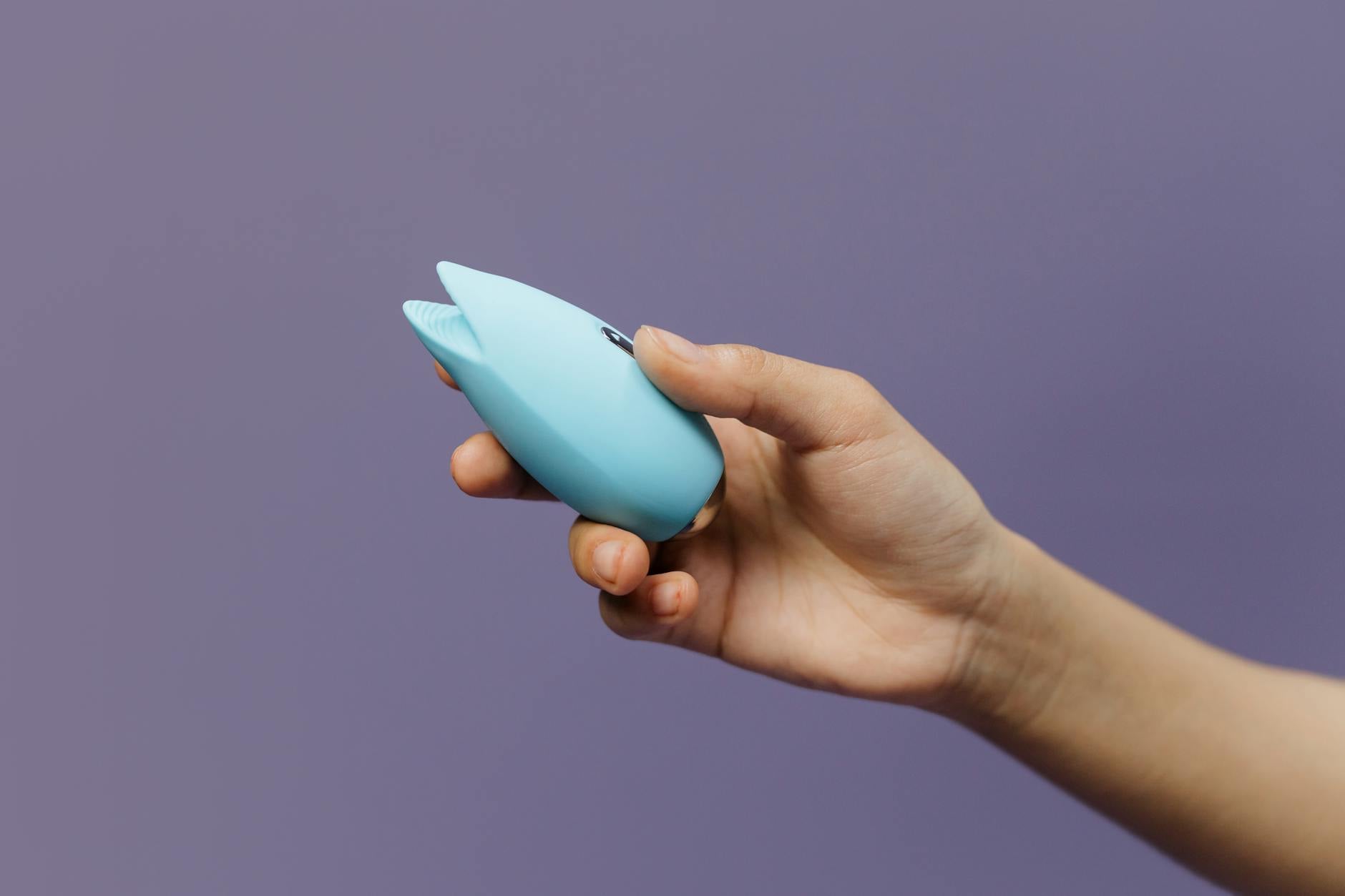
The lemon vibrator (whether you go with Hello Nancy's Lem or another brand's clitoral suction toy) is a tool you're both choosing to use together. That's the frame. That's what makes it sexy rather than awkward.
If they need time or they're hesitant
Don't push. "I get it. We don't have to decide anything today. Just think about it, and we can talk again whenever you're ready."
Sometimes a partner needs time because they're processing their own feelings about sex toys, because they're worried about their role, or because they're just not wired for this particular thing. All of that is information.
If after a reasonable time they're still saying no, then you get to make a choice about what matters more: this specific experience, or the relationship. Most people find that the conversation itself creates curiosity, and curiosity becomes yes within a few weeks.
But sometimes it doesn't. And that's a different conversation, probably one worth having with a couples therapist if the mismatch on desire feels bigger than just this one thing.
The conversations that come after
Once you've opened this door, other things become easier to talk about. Fantasies. Insecurities. Desires that don't fit neatly into what you've been doing.
That's the real win. Not the vibrator. The fact that you trusted each other enough to say the vulnerable thing.
Most couples I work with find that this conversation doesn't create distance. It creates closeness because it required honesty, and honesty is what long-term desire is built on.
Frequently asked questions
What if my partner thinks I'm not satisfied with them?
Your partner might worry that bringing up a lemon vibrator means you're unfulfilled. Address this head-on: "I'm happy with you. This isn't about that. I'm curious about exploring something new together, and I want you to be part of it." Most partners hear this and relax. They're looking for reassurance that they're still wanted. Give them that.
How do I bring this up if we've never talked about toys before?
Start with desire, not education. "I've been thinking about trying something new with you. I'm curious about using a vibrator together because I think it could feel really good." You don't need to justify it with research or statistics. Personal curiosity is enough.
What if they ask where the idea came from?
Be honest. A friend mentioned it. You read about it. You've been curious. You saw it somewhere. The origin doesn't matter much. What matters is that you're bringing it to them now, as a couple thing.
Is it better to ask first or surprise them with the toy?
Always ask first, at least in some form. Surprising someone with a sex toy without consent can feel invasive, even if your intention is playful. The conversation doesn't have to be formal. It can be flirty. "I want to try something with you. Are you in?" But it should be a yes before the toy arrives.
What if they say yes but seem uncomfortable when you actually try it?
Stop. No shame, no pressure. "We can take this at whatever pace feels good." Sometimes the fantasy is hotter than the reality. Sometimes the reality just needs a different approach. Sometimes people need three tries before it clicks. All of that is normal.
How do I know if this will actually strengthen our relationship or if it's a sign something's wrong?
If your underlying relationship is solid, introducing a lemon vibrator strengthens it because it requires communication. If your relationship is struggling, a vibrator won't fix it. But the conversation might surface what's actually going on, which is useful information. The toy isn't the variable. The honesty is.
The version of this conversation that's happening in your head right now is scarier than the actual conversation. Your brain is catastrophizing because vulnerability feels risky. It is risky. You're asking your partner to see a desire of yours. But that risk is exactly what builds lasting intimacy.
You deserve to explore your pleasure. And your partner likely wants to be part of that exploration if you give them the chance. Start with honesty. Everything else follows from there.