
Let's talk about what nobody warns you about
You're in your early 40s, maybe 50. Your periods are weird. Your partner still wants you, but you want... what? Not them. Not anyone. Just sleep and a glass of wine, preferably in that order. You're not broken. You're not frigid. You're in perimenopause, and your libido didn't just take a vacation. It left town without forwarding its address.
Here's the thing that nobody mentions in those breezy menopause articles: the sexual shutdown starts years before your actual last period. While you're still bleeding, your hormones are already staging a coup. Desire drops. Arousal takes longer. Your body doesn't respond the way it used to. And then the guilt kicks in because your partner is fine, your relationship is fine, and you're supposed to be fine too. Except you're not.
This isn't about your relationship. It's biochemistry wearing a very personal disguise.
Why perimenopause nukes your sex drive first
Estrogen doesn't just fall off a cliff during perimenopause. It does something weirder and more exhausting: it swings wildly. One week it's high, the next it's in the basement. One month your cycle is normal, the next it's completely off schedule. This chaos has a name: hormonal volatility. And your brain, your nervous system, and your libido all hate it.
When estrogen is unstable, three things happen simultaneously. First, dopamine production gets erratic. Dopamine is desire's best friend. When it's all over the place, so is your want. Second, your nervous system stays partly activated. You're running a low-level stress response all month because your body never knows what's coming next. Chronic stress kills sex drive dead. Third, progesterone levels are also fluctuating wildly, which tanks your mood and makes everything feel harder than it should.
The practical outcome: arousal feels like trying to start a car in the cold. You turn the key. Nothing. You try again. Still nothing. By the time it finally catches, you're frustrated and tired.
Adding complexity, many people in perimenopause also report feeling invisible. Cultural messaging tells you that sexiness ends after 40. Your body is changing in ways you didn't anticipate. Your partner might not realize anything is different on their end. And suddenly you're stuck between biochemistry and shame, which is the worst place to try to feel desire.
The recovery framework that actually works
Here's what I tell clients in this exact position: recovering libido during perimenopause requires three parallel tracks, not just one.
Track One: Separate the body from the psychology. Your body isn't broken. Your hormones are cycling hard, which is genuinely affecting your capacity to feel turned on. That's not your fault. At the same time, your brain has probably internalized that something is wrong, which adds a layer of anxiety on top of the biology. Naming these as two separate issues is already half the battle. One needs time and maybe medical support. The other needs permission and a tool that works.
Track Two: Stop waiting for spontaneous desire. If you're in perimenopause, spontaneous desire is not coming back until your hormones settle down, which won't happen for years. This is crucial: it doesn't mean you can't still experience pleasure. It means you need to build a container for it that doesn't depend on spontaneity. Schedule it. Make it intentional. Remove the guilt around that structure because intentionality is not less authentic than spontaneity. It's actually more realistic for this stage of your life.
Track Three: Use a tool that meets your nervous system where it is. A traditional vibrator still works, but many people in perimenopause find that suction-based stimulation like a lemon clitoral vibrator feels more accessible. Why? Because suction engages the nerves differently. It doesn't require the intense friction that can feel overwhelming when your tissue is already sensitive from hormonal fluctuation. The Lemon Bullet's lemon vibrator uses gentle suction patterns that let your arousal build gradually, which is exactly what a volatile nervous system needs.
Why a lemon clitoral vibrator during perimenopause specifically helps
I recommend the lemon vibrator to clients for several concrete reasons. First, suction-based stimulation produces a different sensation profile than traditional vibration. For people whose nervous systems are in a state of low-level activation from hormonal chaos, gentler suction often feels less like an assault and more like an invitation. You can start at the lowest setting and spend 15-20 minutes just feeling what pleasure still exists. That alone is radical after months of feeling nothing.
Second, the Lemon Bullet's lemon clitoral vibrator has graduated intensity levels. With perimenopause, you don't always know what your body can handle on any given day. Having patterns 1-3 available means you can start very low and only increase if your body wants more. This removes the frustration of picking a toy that's too intense.
Third, it's quiet and discreet, which matters if you're dealing with a partner who doesn't fully grasp what's happening. You can use it solo, without performance pressure, which is essential when you're rebuilding your relationship with your own pleasure. There's no judgment. No audience. Just you, rediscovering what turns you on when the stakes feel lower.
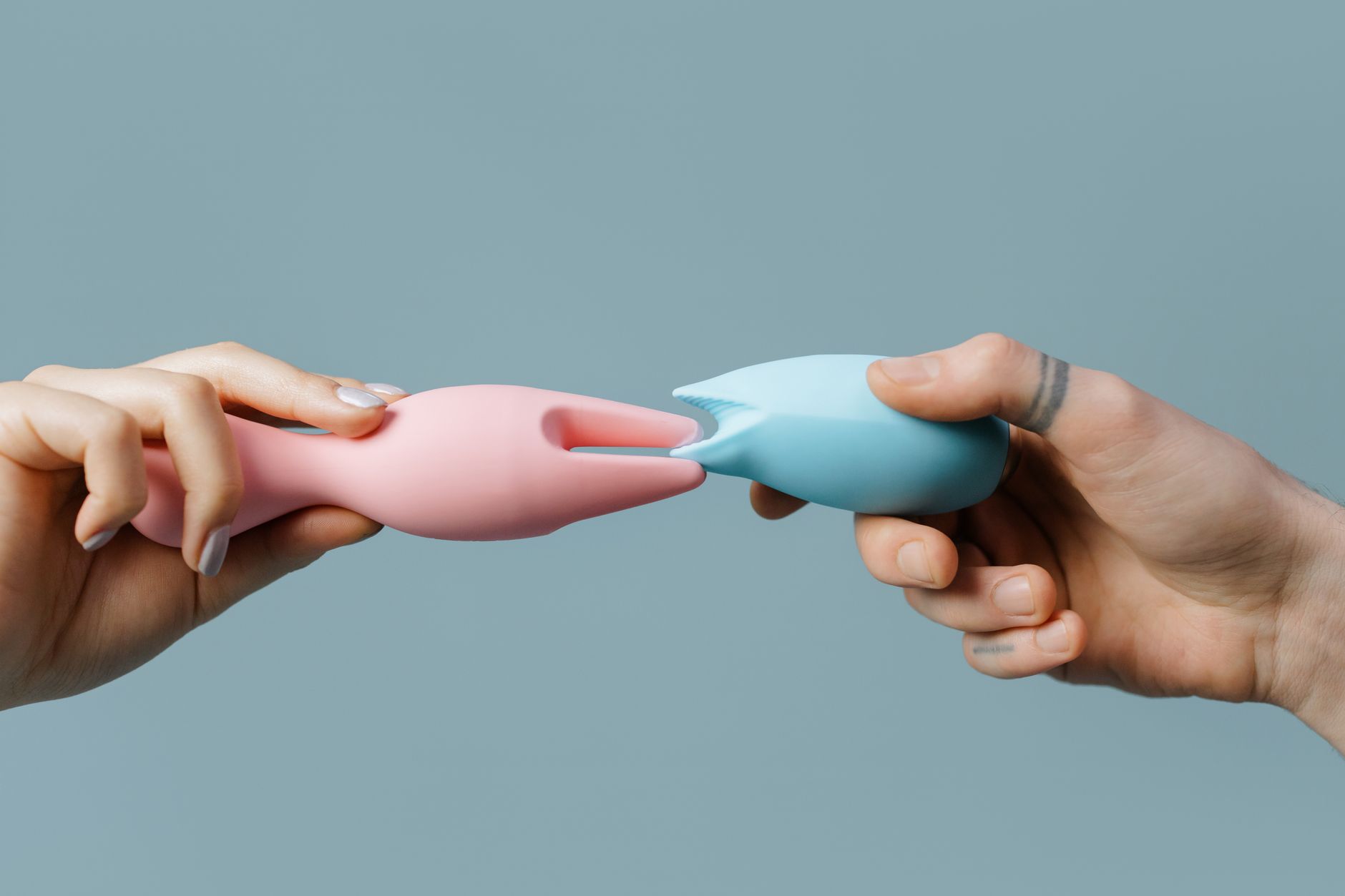
Photo by cottonbro studio on Pexels
The actual protocol: how to start
Here's how to use a lemon clitoral vibrator when you're in perimenopause and your libido feels like a ghost.
Step One: Commit to 20 minutes. Set a timer. Tell your partner you need uninterrupted time. Solo play is not selfish during this phase. It's research. You're gathering data about what still feels good.
Step Two: Start at pattern 1. The lowest suction setting. This isn't about getting to an orgasm as fast as possible. This is about waking up nerve endings that have been sleeping. You might not feel much the first few times. That's normal. Your nervous system is still skeptical.
Step Three: Use lubricant. Even if you think you don't need it, use it anyway. Perimenopause often comes with drier tissue, and lubrication that is water-based helps the suction feel gliding rather than sticky. It also signals to your body that this is intentional and pleasurable, not just mechanics.
Step Four: Notice, don't perform. You're not trying to have an orgasm. You're not trying to feel the way you felt at 35. You're noting: where does this feel good? What rhythm keeps my attention? What speed makes me want to stay instead of exit? This is permission to be selfish about your own sensation.
Step Five: Stop before you're frustrated. If 20 minutes pass and nothing is happening, close up shop. Pleasure during perimenopause builds slowly. Three sessions might feel like nothing. By session seven, your nervous system starts recognizing the pattern and arousal becomes more accessible. Patience is the rare, crucial ingredient.
When to loop in your partner (and how)
If you have a partner, this part matters. Many people in perimenopause keep their declining libido private because they don't want to trigger the "is it me?" spiral. But your partner probably already noticed something shifted. Naming it removes the elephant.
The conversation is not about fixing anything or proving love. It's about updating their operating system. "My hormones are cycling in a way that makes desire feel harder to access right now. This is not about you. It's about me rebuilding my relationship with my own pleasure. I'm going to be intentional about it, and I'd like your patience while I figure it out."
If they're receptive, you can invite them into the process later. Maybe they use the Lemon Bullet on you as part of partnered play. Maybe you use it solo and then join them afterward. Maybe it becomes a tool for reconnection when spontaneous desire isn't available. The point is moving from secrecy into partnership around what's actually happening with your body.
Many couples find that this conversation actually deepens intimacy because finally, the truth is on the table. Your partner wasn't the problem. The hormones were. Now you're both working on solutions together instead of him wondering what went wrong and you drowning in guilt.
What doctors often miss about perimenopause libido
Here's what I've learned from years of working with couples: most doctors screen for thyroid issues, vitamin deficiencies, and depression when libido crashes during perimenopause. Those are worth checking. But they often miss the hormonal volatility itself.
Low-dose estrogen therapy, either oral or transdermal, genuinely helps some people. Others need progesterone support. A few need testosterone. But most don't get offered these options because perimenopause is treated as "not yet menopause" and therefore not urgent. It is urgent. If your libido is gone and your hormones are chaotic, asking your gynecologist about hormone optimization is not extreme. It's reasonable.
What your doctor probably won't tell you: tools like lemon vibrators and suction-based stimulation are part of the recovery. They're not a substitute for medical care. They're a complement. Using a lemon clitoral vibrator when lubrication feels insufficient is also relevant if you're in perimenopause, because tissue changes often coincide with dryness.
Rebuilding desire is not the same as faking it
Here's the hardest part: you might be rebuilding desire, not recovering it. The desire you felt at 30 was tied to different hormones, a different body, maybe a newer relationship. That specific desire isn't coming back. That's not tragedy. That's just biology.
What can come back, or come forward for the first time, is a different kind of desire. One that's less impulsive and more intentional. One that's rooted in knowing what you actually want instead of following the script. That's not a consolation prize. That's often better.
Using tools like a lemon vibrator during perimenopause is part of that discovery. You're not faking pleasure. You're creating the conditions where genuine pleasure becomes possible again. There's a huge difference. One is performance. The other is permission.
Frequently asked questions
Does perimenopause libido ever come back naturally?
Sometimes, yes. For about 30 percent of people, libido stabilizes once hormones actually settle into menopause and the wild swinging stops. For others, it's permanently different. The goal isn't necessarily to get back to where you were. It's to find what works now. A lemon sexual toy helps you explore that middle ground without pressure.
How long does it take to feel desire again after starting with a lemon clitoral vibrator?
It varies wildly. Some people report shifts in 3-4 sessions. Others need 10-15 before their nervous system even believes pleasure is possible again. The key is consistency without pressure. Using it weekly, then twice weekly, helps rebuild the neural pathway between intention and sensation.
Can I use a lemon vibrator if I'm on antidepressants, which also affect libido?
Absolutely. If you're dealing with both hormonal and medication-related libido suppression, gentle suction stimulation can still help. It might take longer to feel arousal, but the tool can support the process. How to use a Lemon Vibrator when antidepressants affect your sex drive covers this in depth.
Should I tell my doctor I'm using a lemon adult toy?
If your doctor is good, yes. It's clinical information. It helps them understand your approach to managing the transition. If your doctor is judgmental, that's on them. Your sexual health matters, and the tools you use to maintain it are part of that conversation.
Does using a lemon clitoral vibrator during perimenopause mean my partner doesn't turn me on anymore?
No. It means your nervous system needs a different type of input right now. Hormonal fluctuation isn't personal. It's chemical. Using an external tool doesn't diminish your capacity to be attracted to your partner. It actually removes the pressure that was making intimacy harder for both of you.
Is it normal to feel nothing the first few times using a lemon vibrator?
Completely normal. If your nervous system has been in low-arousal mode for months, it takes time to wake up. Think of it like gradually turning up the volume on a speaker that's been set to mute. The first few turns feel like nothing. By the time you reach mid-volume, you can finally hear the music. Patience is the whole game here.
You're not broken. This is a transition.
Perimenopause feels like your body is betraying you. It's not. It's changing in ways that need acknowledgment and support, not shame. A lemon vibrator isn't a magic fix. It's a tool that works with your biology instead of against it.
Rebuilding desire during this phase is possible. It looks different than it used to. That's not worse. It's just different. And often, when you get to the other side, you realize that the intentionality and self-knowledge you built during the hard part becomes the foundation for something richer than what existed before.
Start small. Be patient. Give yourself permission to explore without performing. The pleasure is still there. It's just asking for a different approach. If you want to talk through what's happening or need support navigating this transition with your partner, reach out to us.